St Andrew's Day 2026: Date, Traditions and a Scotland Quiz
St Andrew's Day is Monday 30 November 2026. Here is what the day means, how Scotland and other countries mark it, a 40-question Scotland quiz with answers to print, a Scots word game and a plan for a night in.
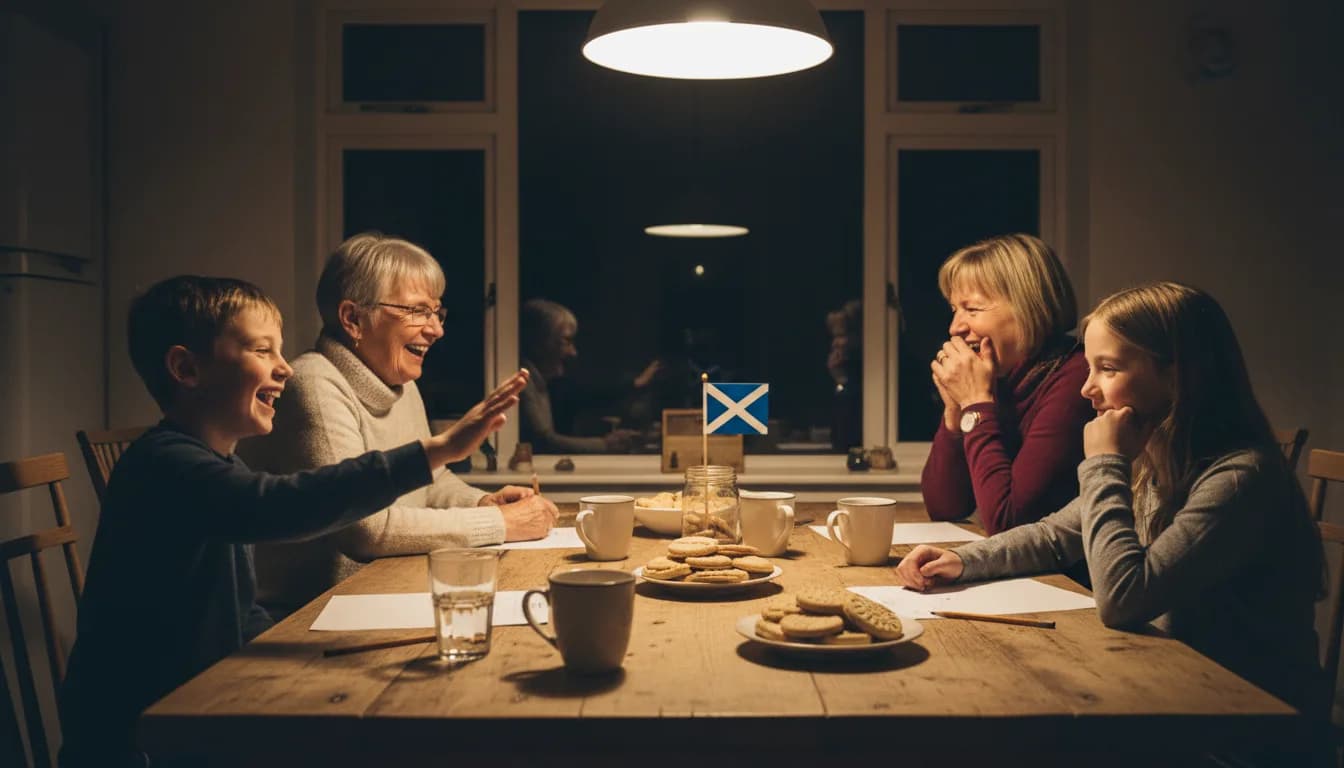
St Andrew's Day arrives at the darkest end of November, when it has been raining for a week and Christmas still feels a long way off. That is exactly why it works. Scotland's national day is an excuse to put the big light off, get people round and have a proper night in, with food, music and an argument about whether the unicorn really is the national animal. It is.
This guide covers when St Andrew's Day is in 2026 and whether you get the day off, who St Andrew was, and how the day is celebrated in Scotland and in the countries where the night before is for telling fortunes. Then the practical part: a 40-question Scotland quiz in four rounds with answers, a Scots word game, six easy activities for families and a plan for the evening.
When is St Andrew's Day 2026?
St Andrew's Day is on 30 November every year. In 2026 that is a Monday. It has been an official bank holiday in Scotland since the St Andrew's Day Bank Holiday (Scotland) Act 2007. When 30 November falls on a weekend, the bank holiday moves to the following Monday.
A bank holiday is not an automatic day off. There is no law requiring banks or any other business to close, and employers do not have to give staff the day. If you are planning a party, Saturday 28 November is the safer bet, with the day itself on the Monday for anyone who does have it off.
St Andrew's Day 2026 at a glance
The day: Monday 30 November 2026. Bank holiday in Scotland: yes, on the day itself. Party night: Saturday 28 November. St Andrew's Eve, the fortune-telling night in Poland and Germany: Sunday 29 November.
Who was St Andrew?
Andrew was a fisherman from Galilee, the brother of Simon Peter and one of the twelve apostles. Tradition says he was crucified on an X-shaped cross, which is why a diagonal cross is called a saltire or St Andrew's Cross.
The legend of the flag goes back to the eve of the Battle of Athelstaneford in 832, when a white cross is said to have appeared against a blue sky. The image of the saint on his cross was on Scottish seals by about 1180, and in 1385 the Parliament of Scotland ordered soldiers to wear a white St Andrew's Cross. Today the Saltire flies from Scottish Government buildings on St Andrew's Day.
He is not Scotland's alone. Andrew is also a patron saint in Greece, Romania, Russia and Ukraine, and 30 November is Independence Day in Barbados.
How Scotland celebrates
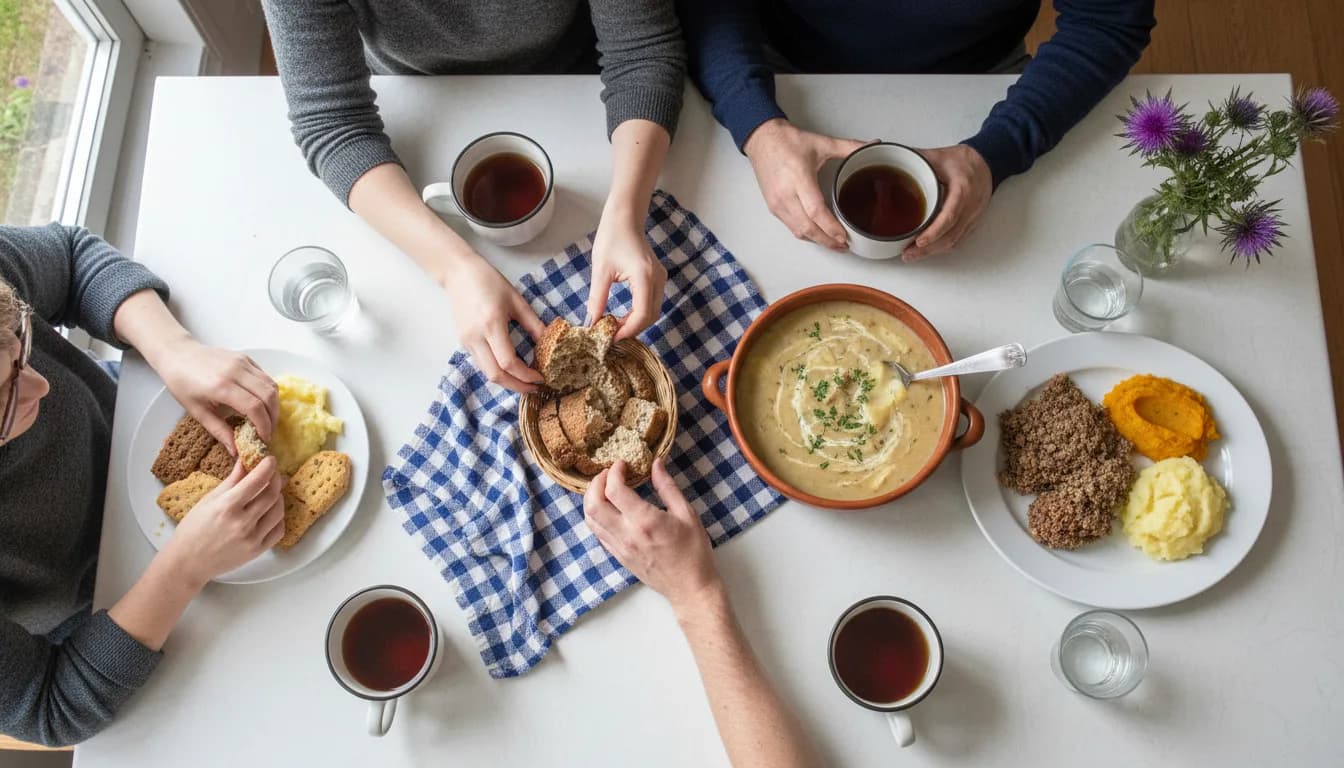
A St Andrew's supper: soup, haggis with neeps and tatties, shortbread to finish.
There is no single ritual. St Andrew's Day is a celebration of Scottish culture, with traditional food, music and dancing, and it opens a winter season of festivals that carries on to Hogmanay and Burns Night. The town of St Andrews and several cities hold events across the whole week.
At home it usually comes down to three things:
A ceilidh, or at least the music. A ceilidh is a social gathering with traditional music and group dances that are called out step by step, so nobody needs to know them in advance.
A Scottish supper. Cullen skink, a soup of smoked haddock, potatoes and onions, then haggis with neeps and tatties, which are mashed turnip and potatoes. Shortbread to finish.
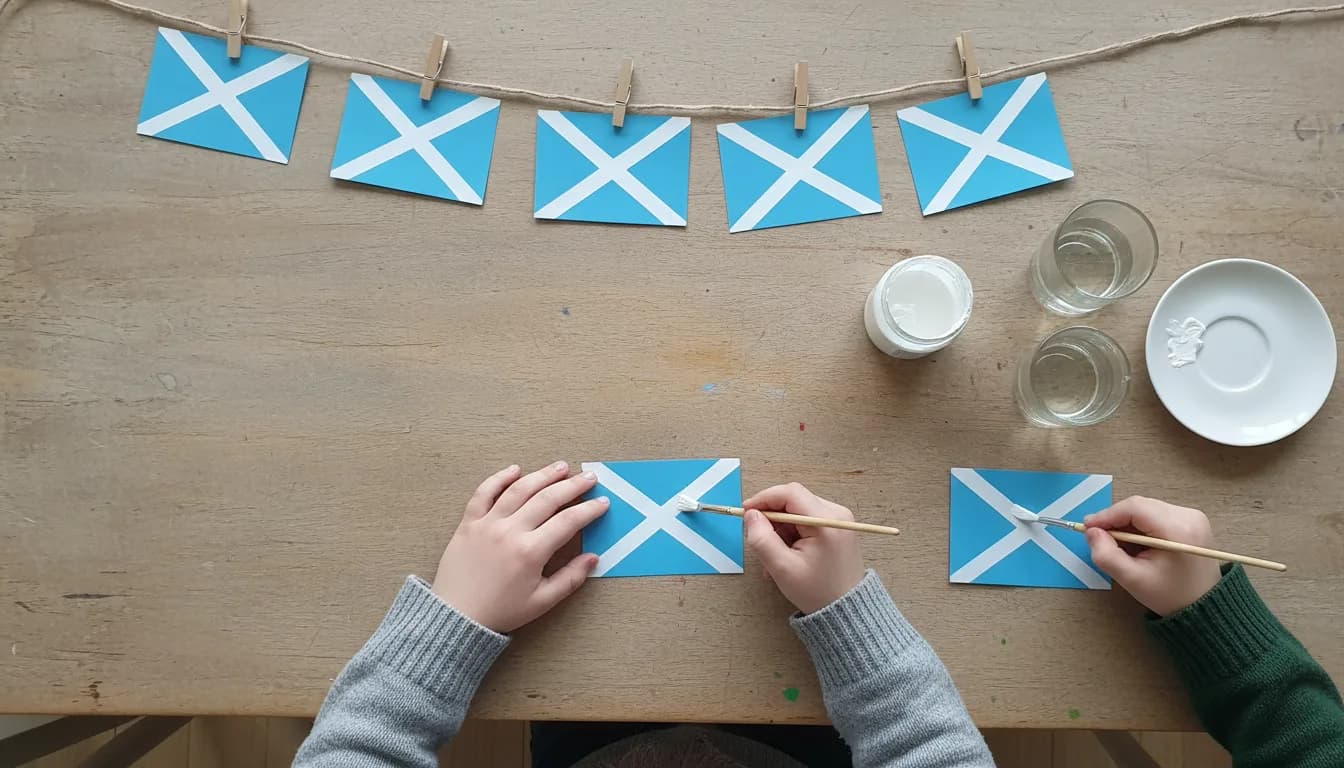
The Saltire. Blue and white bunting, a flag in the window, and with children around, a table of paint and paper.
St Andrew's Eve around the world
In much of central and eastern Europe the night before St Andrew's Day, 29 November, is the night for finding out who you will marry. The customs are old, and one country still celebrates them in a big way.
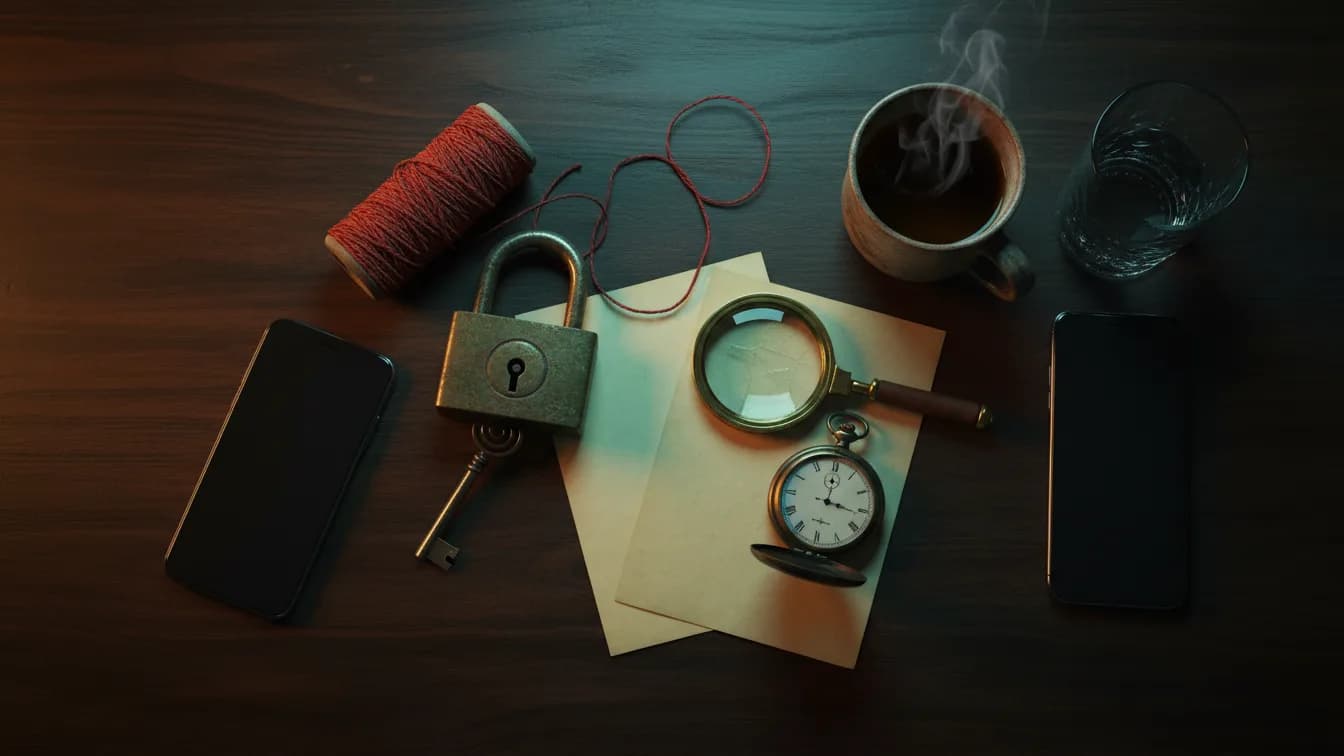
If you want to borrow one for your own party, take the Polish wax: it needs a candle, an old key and a bowl of cold water, and it keeps a room busy for half an hour.
Poland: Andrzejki. Hot wax is poured through the hole of a key into cold water, and the shadow of the hardened shape is read on the wall. Once only for unmarried young women, now a party night for everyone.
Germany and Austria: Andreasnacht. Love oracles such as peeling an apple in one long ribbon and throwing the peel over your shoulder to see an initial, or tossing a slipper towards the door.
Romania. Young women put 41 grains of wheat under the pillow, and a dream of someone stealing them means a wedding next year.
Tenerife. On the evening of 29 November children in Puerto de la Cruz drag strings of tin cans through the streets, and in Icod de los Vinos people slide down the steepest streets on wooden boards.
Barbados. 30 November is Independence Day, and the crest of the national coat of arms shows two stalks of sugar cane crossed in the shape of St Andrew's cross.
Scotland quiz round 1: the basics
Forty questions in four rounds of ten, one point each. Round 1 is the warm-up and children can play it. Print a sheet per team or read the questions out. Answers stay hidden until you ask for them.
Free to print at home. Answers print on a separate page.
Scotland quiz: round 1
The basics. 10 questions, 1 point each
1.What is the capital of Scotland?
2.Which Scottish city has the largest population?
3.On what date is St Andrew's Day?
4.What is the flag of Scotland called?
5.Which two colours are on the Scottish flag?
6.What is Scotland's national animal?
7.Which prickly purple flower is the emblem of Scotland?
8.What is the nickname of the monster said to live in Loch Ness?
9.What is the name of the pleated tartan garment worn at weddings and ceilidhs?
10.Which musical instrument is most closely associated with Scotland?
playbuzzin.com · Start it on the TV, the rest is in your pocket
Answers: Scotland quiz: round 1
1. Edinburgh
2. Glasgow
3. 30 November
4. The Saltire, or St Andrew's Cross
5. Blue and white
6. The unicorn
7. The thistle
8. Nessie
9. The kilt
10. The bagpipes
Round 2: history and legends
Harder. Give half a point for a date that is within ten years.
Free to print at home. Answers print on a separate page.
Scotland quiz: round 2
History and legends. 10 questions, 1 point each
1.St Andrew was the brother of which other apostle?
2.What was St Andrew's trade before he became an apostle?
3.What shape was the cross on which St Andrew is said to have died?
4.Which king led the Scots to victory at the Battle of Bannockburn in 1314?
5.At which battle in 1297 did William Wallace and Andrew Moray defeat an English army?
6.In which year was the Declaration of Arbroath sent to the Pope?
7.Which Scottish queen was executed in England in 1587?
8.In which year did the Acts of Union join the parliaments of Scotland and England?
9.Which stone, used in coronations, was returned to Scotland in 1996?
10.In which year did the Scottish Parliament meet again after almost 300 years?
playbuzzin.com · Start it on the TV, the rest is in your pocket
Answers: Scotland quiz: round 2
1. Simon Peter (St Peter)
2. Fisherman
3. An X, a diagonal cross
4. Robert the Bruce
5. The Battle of Stirling Bridge
6. 1320
7. Mary, Queen of Scots
8. 1707
9. The Stone of Destiny (Stone of Scone)
10. 1999
Round 3: food, music and words
The round where the person who has been to one Burns supper becomes unbearable.
Free to print at home. Answers print on a separate page.
Scotland quiz: round 3
Food, music and words. 10 questions, 1 point each
1.What are neeps and tatties?
2.Which soup is made with smoked haddock, potatoes and onions?
3.What is the biscuit made from butter, sugar and flour called?
4.Which bright orange soft drink is often called Scotland's other national drink?
5.Which poet, celebrated on 25 January, wrote the words to Auld Lang Syne?
6.What is the Scottish name for New Year's Eve?
7.What do you call a gathering with traditional Scottish music and called dances?
8.Which Edinburgh-born author created Sherlock Holmes?
9.Which Edinburgh-born author wrote Treasure Island?
10.Which city hosts the Fringe, held every August?
playbuzzin.com · Start it on the TV, the rest is in your pocket
Answers: Scotland quiz: round 3
1. Turnips (swede) and potatoes
2. Cullen skink
3. Shortbread
4. Irn-Bru
5. Robert Burns
6. Hogmanay
7. A ceilidh
8. Arthur Conan Doyle
9. Robert Louis Stevenson
10. Edinburgh
Round 4: places and sport
The decider. If two teams are level after this round, the tiebreak is: how high is Ben Nevis in metres? Closest wins. It is 1,345.
Free to print at home. Answers print on a separate page.
Scotland quiz: round 4
Places and sport. 10 questions, 1 point each
1.What is the highest mountain in Scotland and in the whole UK?
2.Which loch is the largest in Scotland by surface area?
3.Which sport is the town of St Andrews known as the home of?
4.Which island group lies further north, Orkney or Shetland?
5.On which island is the town of Portree?
6.Which river flows through Glasgow?
7.Which city is known as the Granite City?
8.Which city is known as the capital of the Highlands?
9.Which estuary does the red Forth Bridge cross?
10.Which two Glasgow football clubs contest the Old Firm derby?
playbuzzin.com · Start it on the TV, the rest is in your pocket
Answers: Scotland quiz: round 4
1. Ben Nevis
2. Loch Lomond
3. Golf
4. Shetland
5. Skye
6. The Clyde
7. Aberdeen
8. Inverness
9. The Firth of Forth
10. Celtic and Rangers
Guess the Scots word
A quick game between rounds. Draw a word, read it out, and the first person to give the meaning takes the point. Anyone who grew up in Scotland plays with a handicap: they have to use the word in a sentence instead.
Scots word generator
24 words, no repeats. Meaning hidden until you ask
Hit Draw. There are 24 items in the pool.
All items (24)
1.dreich (Dull, grey and damp weather)
2.drookit (Soaked through)
3.haar (A cold sea fog on the east coast)
4.bairn (A child)
5.lass (A girl or young woman)
6.lad (A boy or young man)
7.wee (Small)
8.braw (Fine, excellent)
9.bonnie (Pretty, beautiful)
10.aye (Yes)
11.ken (To know)
12.blether (A long chat, or to chat)
13.haver (To talk nonsense)
14.wheesht (Be quiet)
15.crabbit (Grumpy, bad-tempered)
16.scunnered (Fed up, sick of something)
17.glaikit (Foolish, not paying attention)
18.coorie (To snuggle or nestle in)
19.loch (A lake or a sea inlet)
20.glen (A narrow valley)
21.ben (A mountain)
22.kirk (A church)
23.neep (A turnip)
24.tattie (A potato)
Six St Andrew's Day activities for families
Saltire bunting: two colours, one shape, and it is done before tea.
For a school night or a Sunday afternoon with children. None of these needs shopping beyond paper and paint.
1. Saltire bunting. Small blue paper flags, a white diagonal cross painted on each, a length of string. One child paints, one strings them up. 30 minutes, ages 4 and up.
2. Design a tartan. Draw a grid with a ruler, then colour stripes in three colours. Everyone names their tartan after the family and explains the colours. 20 minutes, ages 6 and up.
3. Toss the caber, indoors. A cardboard tube from wrapping paper is the caber. It has to flip end over end and land pointing away from you. Hallway only. 15 minutes, ages 5 and up.
4. Ceilidh statues. Scottish dance music on, everyone dances, and when it stops everyone freezes. Last one moving sits out. 10 minutes, any age.
5. Spot the monster. One player hides a toy somewhere in the room while the others look away. Seekers get three yes or no questions before they start. 15 minutes, ages 3 and up.
6. Wax through a key. The Polish St Andrew's Eve tradition from the section above. An adult melts candle wax in a bowl over hot water and pours it through the hole of an old key into cold water. The children hold the shape up to a torch and say what the shadow is. 30 minutes, adult does the pouring.
Take the quiz to the TV
A paper quiz needs a quizmaster, and the quizmaster does not get to play. If you want everyone in the room answering at once, hand the job to the television.
Buzzin is a platform of party games for the TV you already have. Start it in the TV's browser at tv.playbuzzin.com, on a laptop over HDMI, or with the BuzzinTV app on LG, Philips with Titan OS, Android TV and Amazon Fire TV. Guests scan the QR code on the screen and their phone becomes the controller, in the app or straight in the browser. Nobody has to install anything or make an account, and 2 to 12 people can play. The game speaks English, from the host's voice to the questions and the phone screens, and Buzzin also runs in five other languages: Polish, German, Spanish, Turkish and Brazilian Portuguese. The steps are on the how to play page.
The quiz is called TV Show: a voiced host reads the question, four answers appear on the TV, and the fastest correct tap scores. Its decks are general knowledge, not Scotland, so use it as the second half of the night after the four rounds above. For more rounds on paper there are our general knowledge questions and geography trivia questions.
If you try it, tell us on Discord what you liked and what we should improve.
A plan for the evening
For Saturday 28 November 2026 with six to twelve people. With children, start two hours earlier and stop after step four. If you want a longer programme, our guide to hosting a game show night at home has more formats.
16:30 pm, host: soup on, shortbread out, bunting up, quiz sheets printed, one pen per team. TV on and sound checked.
27:00 pm, everyone: arrivals, and a round of Guess the Scots word while people find a seat.
37:30 pm: supper. Rounds 1 and 2 of the quiz between courses.
48:30 pm: wax through a key, one pour each, with the whole room reading the shadows.
59:00 pm: rounds 3 and 4, then the Ben Nevis tiebreak if it is needed.
69:30 pm: push the furniture back for one ceilidh dance, or ceilidh statues if nobody will lead.
710:00 pm: a quiz on the TV for the people who are still arguing about round 2.
Frequently asked questions
What day of the week is St Andrew's Day in 2026?
St Andrew's Day is on Monday 30 November 2026. The date is the same every year. The Monday is also the bank holiday in Scotland.
Is St Andrew's Day a bank holiday?
Yes, in Scotland, since the St Andrew's Day Bank Holiday (Scotland) Act 2007. It is not an automatic day off: banks and other businesses are not required to close, and employers decide whether staff get the day. If 30 November falls on a weekend, the bank holiday moves to the following Monday.
Why is St Andrew the patron saint of Scotland?
Andrew was one of the twelve apostles and, by tradition, died on an X-shaped cross. Legend says a white cross appeared in a blue sky before the Battle of Athelstaneford in 832, and his cross became the Scottish flag, the Saltire. The saint on his cross was on Scottish seals by about 1180.
How do you celebrate St Andrew's Day at home?
Cook a Scottish supper, put on ceilidh music and run a Scotland quiz. With children, make Saltire bunting and design a tartan. For a party, add the Polish St Andrew's Eve custom of pouring wax through a key and reading the shadow on the wall.
What is the difference between St Andrew's Day and St Andrew's Eve?
St Andrew's Day is 30 November, the saint's feast day and Scotland's national day. St Andrew's Eve is the evening of 29 November, which in Poland, Germany, Austria, Romania and other countries is a traditional night for fortune telling.
Written by
Eryk Kruk · Buzzin Founder
I build Buzzin and test every one of these games at my own game nights. Got a question about this piece, or an idea for the next one? Write me: contact@playbuzzin.com
Scan with your phone
Your phone goes straight to the app. The game itself runs on the TV: type tv.playbuzzin.com in the TV browser.